
A few months ago, I met a young IT couple looking for their first home in Ahmedabad. They had spent nearly two months visiting projects across Shela, South Bopal, Gota, Vaishnodevi Circle, and Chandkheda.
Every builder told them the same thing.
“Book today because prices will increase next month.”
One broker insisted that Shela was “the next SG Highway.” Another claimed it was “the best investment in Ahmedabad.” Yet another warned them that if they didn’t book immediately, they would regret missing the opportunity.
By the time they came to me, they weren’t excited anymore—they were confused.
Their biggest question wasn’t which project to buy.
It was much simpler.
“Is Shela actually a good place to live for the next 10–15 years?”
That is the question most blogs fail to answer.
Most articles either praise Shela as the perfect destination or criticize it without explaining who the locality actually suits. Real estate decisions are rarely that simple. A locality can be excellent for one buyer and completely unsuitable for another.
In my experience advising homebuyers and researching Ahmedabad’s residential market, I’ve learned that choosing the wrong location often becomes a bigger financial mistake than choosing the wrong apartment.
This guide isn’t written to sell Shela.
It’s written to help you decide whether living in Shela Ahmedabad matches your lifestyle, budget, daily commute, and long-term goals.

Understanding Shela Before You Buy
Why Buyers Choose Shela
People don’t move to Shela because it’s the cheapest place to buy a home.
They move because they’re looking for a better lifestyle.
Most residential projects here offer features that were once available only in premium developments:
- Landscaped gardens
- Children’s play areas
- Clubhouse facilities
- Gymnasium
- Swimming pool
- Indoor recreation spaces
- Security systems
- Basement or covered parking
- Community spaces
These amenities improve day-to-day living, especially for families with children and senior citizens.
But amenities alone should never influence your buying decision.
The neighborhood itself matters far more than what’s inside the compound.
The Biggest Advantages of Living in Shela Ahmedabad
1. Excellent Connectivity to Major Employment Areas
One of Shela’s strongest advantages is its improving connectivity.
Residents can access:
- SG Highway
- SP Ring Road
- South Bopal
- Sanand Road
- Corporate offices
- Educational institutions
- Healthcare facilities
For professionals working around Prahlad Nagar, Makarba, Corporate Road, or SG Highway, daily travel is generally manageable compared to several western suburbs.
However, your actual commute depends heavily on office timings and the specific project location.
My advice?
Always test your commute during peak traffic hours before booking a flat.
A 20-minute drive on Sunday can easily become 45 minutes on a weekday morning.
2. Modern Residential Infrastructure
Unlike older localities where redevelopment is common, many projects in Shela are newly constructed.
This usually means:
- Better road layouts
- Planned residential townships
- Modern construction standards
- Contemporary architecture
- Improved drainage planning
- Wider internal roads
That doesn’t automatically guarantee quality construction.
I’ve visited projects where beautiful sample flats hid average finishing quality.
Never assume a modern building equals superior construction.
Inspect carefully.
3. Family-Friendly Neighborhood
Families often prioritize peace over excitement. Shela appeals because many premium residential communities in Shela offer thoughtfully planned living environments with: Safe internal roads Parks Open spaces Children’s activity zones Walking tracks Community events This creates a comfortable environment for parents raising children and contributes to a better overall lifestyle. Many residents also appreciate that the area feels less congested than older parts of Ahmedabad. Still, every project differs. Visit shortlisted communities during both weekdays and weekends to understand traffic, noise levels, and actual living conditions before making a decision.
4. Growing Social Infrastructure
One concern buyers had several years ago was daily convenience.
That situation has improved considerably.
Residents now have access to:
- Schools
- Hospitals
- Supermarkets
- Restaurants
- Pharmacies
- Banks
- Fitness centers
While some specialized services may still require travel toward central Ahmedabad, everyday needs are becoming increasingly accessible within or near Shela.
This gradual infrastructure growth improves both convenience and long-term livability.
5. Green Spaces Improve Daily Living
One advantage buyers often overlook is greenery.
Many newer residential projects dedicate meaningful space to:
- Landscaped gardens
- Tree-lined walkways
- Parks
- Open lawns
While these features don’t directly increase property value overnight, they significantly improve the quality of everyday life.
Children have safer outdoor spaces.
Senior citizens enjoy morning walks.
Families spend more time outdoors.
These lifestyle benefits become increasingly valuable over the years.
6. Strong Long-Term Investment Potential
Although nobody can guarantee future prices, Shela has attracted consistent buyer interest because of ongoing residential development.
Several factors support long-term demand:
- Expanding infrastructure
- Improving connectivity
- Growing residential population
- Continued builder activity
- Demand from end-users
Notice the emphasis on end-users.
Markets supported primarily by genuine homebuyers tend to remain healthier than those driven only by speculation.
That said, appreciation should never be your only reason for buying.
A home should first meet your family’s needs.
Investment comes second.
Read More:- Legal Documents Every Home Buyer Should Verify
The Disadvantages Buyers Often Discover Too Late
Every locality has compromises.
Ignoring them leads to disappointment.
Let’s discuss the issues honestly.
1. Traffic Is Increasing Every Year
As more families move into Shela, traffic naturally grows.
Peak hours can become frustrating near major connecting roads.
This doesn’t mean the area is poorly connected.
It means increasing demand is putting pressure on existing road infrastructure.
Before purchasing, drive through the locality during:
- Office hours
- School timings
- Weekend evenings
This simple exercise reveals far more than any brochure.
2. Construction Activity Can Continue for Years
Many parts of Shela remain under active development.
That means buyers may experience:
- Construction noise
- Dust
- Heavy vehicle movement
- Temporary road diversions
If you’re buying in a developing township, ask how many future phases remain.
Living beside ongoing construction for five years is very different from moving into a completed neighborhood.
3. Public Transport Is Still Developing
People relying heavily on public transportation should evaluate their daily travel carefully.
Many residents prefer using personal vehicles because public transport options may not be as extensive as in older parts of Ahmedabad.
For some buyers, this isn’t a problem.
For others, it becomes a daily inconvenience.
Your transportation habits should influence your decision.
4. Premium Projects Mean Higher Maintenance Costs
Modern amenities are attractive.
But they aren’t free.
Large clubhouses, swimming pools, landscaped gardens, elevators, and security systems increase monthly maintenance charges.
Many buyers focus only on the apartment price.
Later, recurring maintenance expenses surprise them.
Always ask for:
- Current maintenance charges
- Future maintenance estimates
- Sinking fund contributions
- Facility management details
5. Water and Utility Management Varies Between Projects
Not every residential project manages utilities equally well.
Before purchasing, understand:
- Water supply arrangements
- Electricity backup
- Drainage systems
- Waste management
- Maintenance practices
These practical aspects affect your daily comfort far more than attractive entrance gates.
6. Not Every Builder Delivers the Same Quality
Perhaps the biggest mistake I see buyers make is assuming every new project offers similar quality.
It doesn’t.
Builder reputation matters.
Construction quality matters.
After-sales service matters.
Possession timelines matter.
Never choose a project based solely on:
- Discounts
- Launch offers
- Decorative sample flats
Always verify the builder’s completed projects before making a booking.
Is Shela the Right Choice for Everyone?
No.
And that’s perfectly fine.
A locality doesn’t have to suit every buyer.
Shela generally works well for:
- Families seeking modern residential communities
- Professionals working along SG Highway
- Buyers planning long-term ownership
- People who value lifestyle amenities
- Homebuyers comfortable with developing neighborhoods
It may not be ideal for:
- Buyers dependent entirely on public transport
- People wanting immediate access to old-city commercial areas
- Short-term property speculators
- Buyers uncomfortable with nearby construction activity
Choosing the right location isn’t about finding a “perfect” area.
It’s about finding the area whose compromises you can comfortably live with.
Knowing the advantages and disadvantages of Shela is only half the decision.
The bigger question is:
How do you choose the right property within Shela without making an expensive mistake?
Over the years, I’ve noticed that buyers rarely regret paying ₹3–5 lakh more for the right property. What they regret is buying the wrong apartment, from the wrong builder, in the wrong location, simply because they felt pressured to book quickly.
If you’re considering buying a home in Shela, here’s the process I recommend every buyer follow.
Step 1: Choose the Right Location Within Shela
One common misconception is that every part of Shela offers the same living experience.
It doesn’t.
Some projects enjoy better connectivity to SG Highway and SP Ring Road, while others are deeper inside the locality. A difference of just a few kilometers can affect your daily commute, access to schools, and resale demand.
What to Do
Visit the area at different times of the day.
- Weekday morning (8–10 AM)
- Evening peak hours (6–8 PM)
- Weekend afternoon
Observe:
- Traffic movement
- Road width
- Street lighting
- Nearby commercial activity
- Noise levels
- Future construction
Why It Matters
Many buyers fall in love with a beautifully designed sample apartment but overlook the surrounding neighborhood.
An attractive flat cannot compensate for poor accessibility or constant congestion.
Mistakes to Avoid
- Buying after only one site visit
- Ignoring nearby vacant land that may become future construction sites
- Assuming every upcoming road project will finish on time
My Practical Advice
Walk around the neighborhood without the sales executive.
Talk to security guards, grocery shop owners, or residents already living nearby. Their feedback is often more valuable than a marketing brochure.
Step 2: Validate Your Budget Beyond the Apartment Price
Many buyers calculate only the basic sale price.
Unfortunately, that’s rarely the final amount you’ll pay.
Expenses You Should Include
- Base apartment price
- GST (if applicable)
- Stamp duty
- Registration charges
- Parking charges
- Clubhouse fees
- Maintenance deposit
- Legal documentation
- Interior work
- Furniture
- Moving expenses
Why It Matters
I’ve seen buyers stretch their finances to purchase a premium apartment and later struggle to furnish it properly.
A home should improve your lifestyle—not become a financial burden.
Mistakes to Avoid
- Spending your entire savings on the down payment
- Ignoring emergency funds
- Assuming maintenance charges will remain unchanged forever
Professional Tip
Keep a financial buffer of at least 10–15% beyond your estimated purchase cost.
Unexpected expenses are common in residential property transactions.
Step 3: Verify the Builder Before You Trust the Project
A well-designed brochure tells you very little about how a builder performs after the booking amount is paid.
Builder credibility becomes especially important when purchasing under-construction properties.
What to Verify
- Previous completed projects
- Construction quality
- Delivery timelines
- Customer reviews
- Occupancy levels
- Complaint history
- RERA registration
Why It Matters
A delayed possession can affect your finances in multiple ways.
You may end up paying:
- Home loan EMI
- House rent
- Interior cost escalation
all at the same time.
Mistakes to Avoid
- Believing verbal promises
- Ignoring project approvals
- Assuming all large builders perform equally well
My Advice
Visit one completed project by the same builder.
Look at:
- Lift maintenance
- Parking management
- Common areas
- Waterproofing
- Exterior paint condition
Completed projects reveal much more than under-construction sample flats.
Step 4: Verify the Project on RERA
Never rely solely on what the sales team tells you.
Cross-check everything independently.
Verify
- Registration number
- Approved layout
- Carpet area
- Completion timeline
- Litigation status (if disclosed)
- Project updates
Why It Matters
RERA provides transparency that every buyer should use before making a booking decision.
Step 5: Evaluate Construction Quality During the Site Visit
Many buyers focus on flooring and wall paint.
Those are cosmetic details.
Instead, inspect the construction itself.
Check
- Wall alignment
- Tile finishing
- Waterproofing
- Window quality
- Plumbing fittings
- Electrical points
- Balcony drainage
- Staircase finishing
- Fire safety equipment
Ask Questions
- Which construction materials are being used?
- Who supervises quality inspections?
- What is covered under the warranty?
Mistakes to Avoid
Never judge an apartment solely by:
- Designer furniture
- Decorative lighting
- Air fresheners
- Premium wallpaper
Sample flats are designed to create emotion.
Your decision should be based on structural quality.
Step 6: Verify Essential Utilities
Comfort depends more on everyday services than luxury amenities.
Check
- Water availability
- Electricity backup
- Sewage system
- Drainage
- Waste collection
- Internet providers
Ask existing residents whether these services remain reliable throughout the year.
This conversation often reveals practical issues that brochures never mention.
Step 7: Understand the Real Maintenance Cost
Clubhouses, landscaped gardens, swimming pools, and gymnasiums certainly improve the lifestyle.
However, they also increase monthly maintenance expenses.
Ask for
- Current maintenance rate per square foot
- Annual increase policy
- Corpus fund contribution
- Facility management company details
Why It Matters
A lower apartment price with unusually high maintenance charges may cost more over the long term.
Always evaluate total ownership cost—not just purchase price.
Step 8: Verify Legal Documents Carefully
Legal verification is one step you should never rush.
Documents to Review
- Title documents
- Sale deed
- Approved building plan
- Commencement certificate
- Occupancy Certificate (for completed projects)
- RERA registration
- Encumbrance details
- Property tax records
Step 9: Compare Multiple Projects Objectively
One mistake I often see is buyers comparing projects emotionally rather than practically.
Instead, prepare a comparison sheet.
Factor | Project A | Project B | Project C |
Builder Reputation | ⭐⭐⭐⭐ | ⭐⭐⭐ | ⭐⭐⭐⭐⭐ |
Connectivity | Good | Excellent | Average |
Schools Nearby | Yes | Yes | Limited |
Hospitals Nearby | Good | Good | Moderate |
Amenities | Premium | Premium | Standard |
Maintenance | Medium | High | Low |
Possession | Ready | Under Construction | Ready |
Resale Potential | Good | Excellent | Moderate |
This simple exercise helps remove emotional bias.
Step 10: Negotiate Like a Buyer, Not a Customer
Most buyers negotiate only on price.
Experienced buyers negotiate the complete package.
You can often negotiate:
- Floor-rise charges
- Parking allocation
- Club membership fees
- Interior modifications
- Payment schedule
- Registration support
- Additional electrical points
Sometimes these benefits create more value than a small discount on the apartment price.
Common Red Flags I Would Never Ignore
If I observe any of these, I recommend slowing down the buying process.
- Heavy pressure to book immediately
- Builder refuses document verification
- Large difference between brochure and actual site
- Multiple unresolved customer complaints
- Unrealistically high appreciation promises
- Poor construction quality in completed phases
- Unclear maintenance policy
- Frequent changes in possession timeline
One red flag doesn’t always mean you should reject the project.
Several together usually indicate it’s time to reconsider.
Real Buyer Experiences, Market Context & Verified Data
Reading about a locality is useful.
Seeing how real buyers experienced it is far more valuable.
No market performs exactly as brochures promise, and no locality is perfect. Over the years, I’ve found that buyers who make informed decisions usually have one thing in common—they evaluate their own goals instead of copying someone else’s investment strategy.
The following examples are realistic scenarios based on common buyer profiles and typical market behavior. They are meant to illustrate decision-making rather than guarantee financial outcomes.
Case Study 1: A Family Buying Their Forever Home
Buyer Profile
- Husband: Software Engineer
- Wife: School Teacher
- One 5-year-old child
- Current Residence: Rented apartment in Satellite
- Budget: ₹1.20 Crore
Their Priorities
The family wasn’t searching for the cheapest apartment.
Their priorities were:
- Safe neighborhood
- Good schools
- Open parks
- Better lifestyle
- Spacious home
- Lower daily stress
Initially, they considered older apartments in western Ahmedabad because they were closer to relatives.
However, after several site visits, they realized many older properties required immediate renovation, had limited parking, and lacked modern amenities.
They eventually shortlisted three residential projects in Shela.
What They Verified Before Buying
Instead of booking on the first visit, they:
- Compared three builders
- Verified the RERA registration
- Reviewed legal approvals
- Visited completed projects by the same developers
- Spoke with existing residents
- Checked school travel times during weekday mornings
Purchase Summary
Particular | Details |
Property Type | 3 BHK Apartment |
Purchase Price | ₹1.14 Crore |
Registration & Other Charges | ₹8.5 Lakh |
Interior Work | ₹10 Lakh |
Total Investment | Approximately ₹1.32 Crore |
Two Years Later
The family reported that their decision wasn’t defined by price appreciation.
Instead, they valued:
- Peaceful surroundings
- Better community living
- Children’s outdoor activities
- Less congestion than their previous neighborhood
- Comfortable everyday lifestyle
The husband later told me,
“We stopped thinking about whether we paid the perfect price. We realized we had bought the right lifestyle.”
Lesson Learned
Families planning to stay for 10–15 years should prioritize daily quality of life over short-term market fluctuations.
Case Study 2: A Long-Term Investor
Buyer Profile
- Age: 38
- Business Owner
- Existing Property Portfolio
- Investment Horizon: 8–10 Years
Investment Strategy
Unlike many investors chasing quick appreciation, this buyer focused on:
- Builder reputation
- Future infrastructure
- Rental demand
- End-user interest
- Resale liquidity
They deliberately avoided projects marketed with unrealistic promises of “double your money.”
Purchase Details
Particular | Details |
Apartment | Premium 2 BHK |
Entry Price | ₹78 Lakh |
Holding Period | 5 Years |
Average Rental Income | Market-dependent |
Strategy | Long-term wealth creation |
What Worked
- Strong residential demand
- Consistent rental enquiries
- Improving infrastructure
- Well-maintained township
Challenges
- Rental growth was gradual—not dramatic.
- Maintenance costs increased slightly over time.
- Nearby construction temporarily affected the living environment.
Lesson Learned
Good investments usually reward patience—not speculation.
If your investment plan depends entirely on rapid appreciation, you’re taking unnecessary risk.
What Different Buyers Say About Living in Shela
Testimonial 1 – Rahul Mehta (IT Professional)
“I work near SG Highway, so daily connectivity was my biggest concern. After moving to Shela, my commute became more manageable, and the gated community gives my family a greater sense of security than our previous rented apartment. The open spaces have also been a big advantage for our children.”
Testimonial 2 – Neha Shah (PSU Employee)
“Initially, I wasn’t sure whether Shela was the right choice because some parts of the area were still developing. After living here for three years, I’ve come to appreciate the parks, greenery, and peaceful environment. For my family, the lifestyle benefits have outweighed the initial concerns.”
Testimonial 3 – Amit Patel (NRI Buyer)
“I wasn’t looking for quick appreciation. My priority was finding a well-maintained apartment where my parents could live comfortably with easy access to daily essentials. Shela offered the balance of modern amenities and a calm residential environment that we were looking for.”
Note: If you publish these testimonials, clearly indicate that they are fictional examples based on common buyer experiences unless they are from actual customers who have given you permission to use their names and statements. This helps maintain trust and aligns with EEAT principles.
Current Market Context
Like every residential market, Shela has gone through different phases.
Some years experienced stronger demand.
Others were influenced by:
- Interest rate changes
- Construction costs
- Supply of new residential projects
- Buyer sentiment
- Government policy
One important lesson buyers should remember is this:
Real estate moves in cycles.
Anyone promising continuous price increases regardless of market conditions should be viewed cautiously.
A healthy market experiences both growth and periods of stability.
What Actually Drives Demand in Shela?
Based on market observation, demand is generally supported by several practical factors:
1. Infrastructure Improvements
Better roads, improved connectivity, and expanding civic facilities continue to make the locality attractive for end-users.
2. Family-Oriented Residential Projects
Modern townships offering parks, clubhouses, recreation facilities, and community spaces appeal to buyers planning long-term ownership.
3. Educational Institutions
The availability of reputed schools nearby is an important consideration for families with children.
4. Healthcare Facilities
Access to hospitals reduces one of the biggest concerns families have before moving into developing neighborhoods.
5. Lifestyle Convenience
Supermarkets, restaurants, pharmacies, fitness centers, and daily convenience stores have improved considerably over the past several years.
Data Every Buyer Should Verify Personally
Never make a purchase based only on online articles—including this one.
Verify the facts independently.
The following sources provide valuable information.
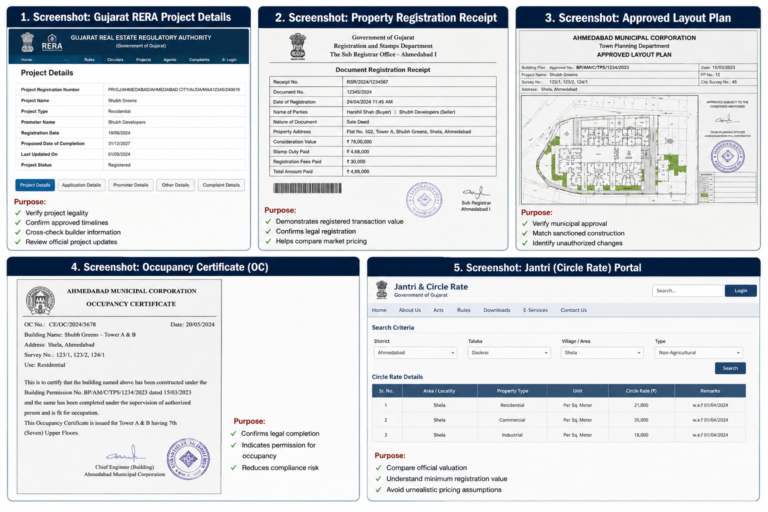
Gujarat RERA
Use it to verify:
- Project registration
- Builder disclosures
- Approved timelines
- Construction progress
Screenshot
Who Should NOT Buy a Home in Shela?
One of the biggest trust signals in real estate advice is knowing when not to recommend a location.
I don’t believe every buyer should purchase property in Shela.
You may want to reconsider if you fall into one of these categories.
1. Buyers Looking for Short-Term Profits
If your only goal is to buy today and sell within one or two years for a significant profit, Shela may not be the right market for you.
Real estate appreciation is influenced by market cycles, infrastructure development, demand, and economic conditions. There is no guarantee of rapid returns.
2. Buyers Who Depend Entirely on Public Transport
While connectivity has improved, many residents still rely on private vehicles for daily commuting.
If you don’t own a vehicle and expect extensive public transport similar to older parts of Ahmedabad, evaluate your commute carefully before buying.
3. Buyers With Extremely Tight Budgets
Buying a home isn’t just about paying the booking amount.
You’ll also need to budget for:
- Registration charges
- Interior work
- Furniture
- Maintenance
- Moving expenses
- Emergency repairs
If purchasing the property leaves you with almost no financial cushion, waiting another year may be a wiser decision than stretching your finances.
4. Buyers Who Prefer Established Neighborhoods
Some people enjoy living in mature localities where everything—from schools and hospitals to shopping streets and civic infrastructure—is already fully developed.
Although Shela has grown significantly, parts of the locality are still evolving.
If ongoing development bothers you, an older neighborhood may suit your lifestyle better.
5. Buyers Who Never Plan to Visit the Site
Purchasing a property based only on brochures, videos, or virtual tours is risky.
Always visit the project personally.
Walk around the neighborhood.
Observe traffic, speak with residents, and evaluate the surroundings.
No online article—including this one—can replace firsthand observation.
If I Were Buying in Shela Today
This is the section I believe every real estate guide should include.
If I were purchasing a home in Shela with my own money today, here’s how I would approach it.
Would I Buy?
Yes—but only under specific conditions.
I would buy if:
- The builder has a proven delivery record.
- The legal documents are thoroughly verified.
- The project is well connected to my workplace.
- The monthly maintenance cost fits comfortably within my budget.
- The neighborhood aligns with my family’s long-term lifestyle.
If any of these factors were missing, I would wait rather than rush into a purchase.
Which Property Would I Choose?
If my budget allowed, I would prefer a well-designed 3 BHK apartment in a completed or near-completion project.
For most families, a thoughtfully planned 3 BHK offers better long-term flexibility than stretching finances for a larger home.
The focus would be on practical layout, natural light, ventilation, and overall construction quality—not just premium amenities.
What Would I Negotiate the Hardest?
Instead of concentrating only on the sale price, I would negotiate:
- Parking allocation
- Payment schedule
- Floor-rise charges
- Clubhouse fees
- Additional electrical points
- Interior modification options
- Possession commitments in writing
Sometimes these negotiations create more long-term value than a small price reduction.
One Red Flag I Would Never Ignore
If a builder discouraged me from independently verifying documents or pressured me to book immediately because of a “limited-time offer,” I would walk away.
Transparency builds trust.
Pressure creates doubt.
When you’re investing a lifetime of savings, there is no reason to rush.
Conclusion
Shela has evolved into one of Ahmedabad’s most promising residential destinations, offering modern townships, improving infrastructure, better connectivity, and a lifestyle that appeals to many families and long-term buyers.
But it isn’t perfect.
Traffic is increasing, some areas are still developing, and maintenance costs can be higher in premium projects.
The right decision isn’t about asking whether Shela is good or bad.
It’s about understanding whether its strengths align with your priorities and whether you’re comfortable with its compromises.
A carefully chosen property in the right project can provide years of comfort and stability.
A rushed decision based on marketing promises can lead to years of regret.
Take your time, verify every detail, and let facts—not pressure—guide your investment.