
Documents To Verify Before Buying a Flat in Shela: A few months ago, a family looking for a flat in Shela contacted me after visiting three different residential projects.
Like most buyers, they had already compared amenities, floor plans, clubhouse facilities, and pricing.
One builder offered a “special discount” that was supposedly valid only until the weekend.
Another broker claimed that inventory was running out quickly and prices would increase the following month.
The family was ready to pay the booking amount.
Before proceeding, they asked a simple question:
“What documents should we verify before buying?”
When we started checking the paperwork, a problem appeared.
The project was registered under RERA, but the Occupancy Certificate (OC) for the specific tower was still pending.
The builder’s sales team had never mentioned it.
Had the family proceeded without verification, they could have faced future issues related to possession, resale, financing, and legal compliance.
This is exactly why document verification matters.
Most property buyers spend weeks comparing prices and only a few minutes reviewing legal documents.
That approach is backward.
A slightly expensive flat with clean paperwork is usually safer than a cheaper property with legal uncertainties.
In my experience advising buyers in Ahmedabad’s residential market, documentation problems are among the most common reasons for future disputes, delayed transactions, loan rejections, and financial losses.
This guide explains the documents that genuinely matter before buying a flat in Shela and how to verify them properly.
Documents To Verify Before Buying a Flat in Shela
Shela has evolved from a developing suburb into one of Ahmedabad’s most active residential markets.
New projects continue to launch, infrastructure keeps improving, and buyer interest remains strong.
However, rapid development also creates risks.
Many buyers assume that every new project has identical approvals and legal clearances.
That assumption can become expensive.
The reality is that every residential property should be evaluated independently.
Documentation should never be treated as a formality.
It should be treated as risk management.
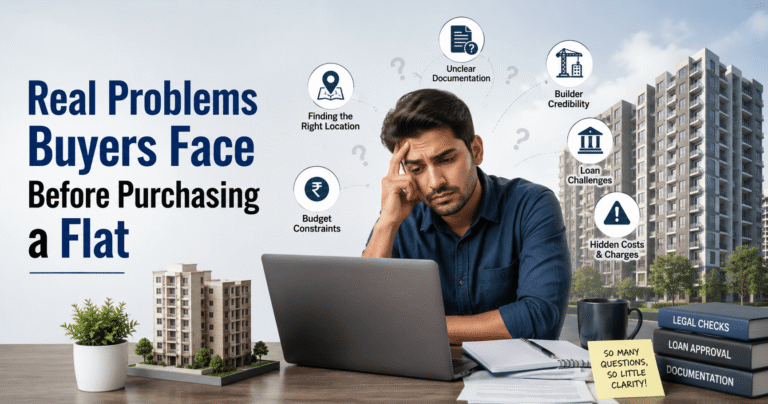
Real Problems Buyers Face Before Purchasing a Flat
Price Looks Attractive But Hidden Risks Exist
A lower price often attracts buyers.
What many fail to investigate is why a property is cheaper than comparable options nearby.
Sometimes the reason is harmless.
Sometimes it involves approval delays, legal complications, incomplete documentation, or title-related concerns.
Without proper due diligence, buyers may not discover these issues until years later.
Trusting Marketing More Than Documents
I frequently see buyers spend hours discussing amenities while ignoring ownership records.
Beautiful brochures do not provide ownership proof.
A premium clubhouse does not confirm legal clearance.
Marketing material should never replace document verification.
Builder Reputation Is Often Misunderstood
Many buyers believe a large builder automatically means a safe purchase.
That is not always true.
Builder credibility should be evaluated through:
- Previous project delivery records
- RERA compliance history
- Occupancy Certificate issuance history
- Customer feedback
- Legal dispute records
The safest projects are usually those supported by strong documentation rather than strong advertising.
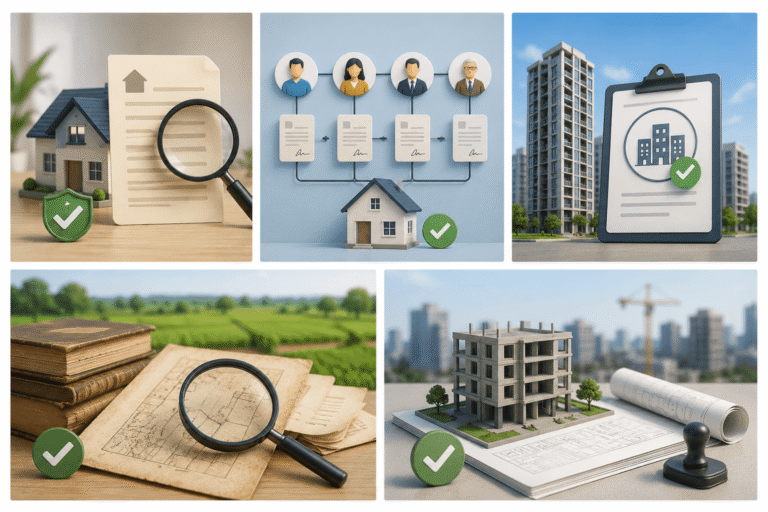
Step 1: Verify the Property Title
The Property Title is one of the most important aspects of any apartment purchase.
A clear title confirms that ownership rights are legally established and transferable.
Request:
- Title Deed
- Sale Deed
- Ownership Proof
- Land Title records
The objective is to confirm that the seller legally owns the property and has the right to transfer ownership.
Why It Matters
An unclear Property Title can lead to:
- Property Disputes
- Court cases
- Loan rejection
- Delayed resale
Common Buyer Mistake
Many buyers assume that if construction exists, ownership must be clear.
Construction and ownership are completely different matters.
Always verify both.
Step 2: Check the Ownership Chain
A proper ownership chain shows how ownership has transferred over time.
The chain should be traceable and supported by documentation.
Review:
- Previous Sale Deeds
- Conveyance Deeds
- Historical ownership records
Why It Matters
Breaks in the ownership chain can create future legal challenges.
A lawyer should carefully review ownership history before purchase.
Step 3: Verify RERA Registration
RERA has improved transparency in the real estate sector.
However, registration alone should not be treated as a guarantee of safety.
Verify:
- Registration Number
- Approved plans
- Project status
- Completion timeline
- Promoter details
→ Confirms project registration, approvals, and declared timelines.
Why It Matters
RERA provides an important layer of buyer protection, but independent verification remains necessary.
Step 4: Verify Land Records and Revenue Records
The land on which the project is built should have clear legal standing.
Review:
- Land Records
- Revenue Records
- Mutation Record
- NA Order
Why It Matters
These records help establish lawful land ownership and approved usage.
Red Flags
- Ownership inconsistencies
- Missing mutation entries
- Incomplete land conversion process
Step 5: Verify Development Permission and Approvals
Request copies of:
- Development Permission
- Layout Approval
- Building Plan Approval
- Builder Approval
Why It Matters
These approvals confirm that construction complies with regulations.
Common Mistake
Many buyers verify project approval but ignore tower-specific approvals.
Always verify the exact tower and unit you intend to purchase.
Step 6: Check Completion Certificate
The Completion Certificate confirms that construction has been completed according to approved plans.
Why It Matters
Without a CC, compliance concerns may arise later.
Step 7: Verify Occupancy Certificate
The Occupancy Certificate is among the most important documents for a ready possession flat.
The OC confirms that authorities consider the building suitable for occupation.
Why It Matters
Without an OC:
- Resale can become difficult
- Utility issues may arise
- Financing challenges may occur
Step 8: Check Encumbrance Status
An Encumbrance Certificate helps identify whether legal liabilities exist against the property.
Examples include:
- Loans
- Financial claims
- Legal charges
Why It Matters
An unresolved encumbrance can create significant legal risk.
This step is essential for fraud prevention.
Step 9: Verify Home Loan and Bank Approval
As part of your Legal Checklist Before Buying a Flat, it is important to verify whether the project has been approved by reputed banks and financial institutions. Projects that receive approval from major lenders generally undergo a certain level of legal and technical scrutiny before financing is offered.
However, buyers should understand an important reality: bank approval should be treated as an additional confidence factor, not as a substitute for independent legal verification. Banks assess a project’s eligibility primarily from a lending and risk-management perspective. Their evaluation is not specifically designed to protect your long-term ownership interests or identify every potential legal issue. To ensure a secure property purchase, always conduct your own due diligence and consult a qualified property lawyer before making a final decision.
Step 10: Review the Agreement to Sell
Before paying a significant amount, review the Agreement to Sell carefully.
Pay attention to:
- Payment schedules
- Possession commitments
- Penalty clauses
- Cancellation conditions
Common Mistake
Buyers often sign quickly without understanding obligations and restrictions.
Never rush this stage.
Step 11: Understand Registration Costs
Many homebuyers focus only on the flat’s purchase price and overlook additional expenses involved in the transaction. Costs such as Stamp Duty, Registration Charges, and other Property Registration fees can significantly increase the overall budget. Understanding these charges in advance helps avoid last-minute financial stress and ensures better planning.
Many buyers calculate only the apartment price.
Actual acquisition costs also include:
- Stamp Duty
- Registration Charges
- Property Registration expenses
Understanding these costs prevents budget surprises.
Step 12: Verify Allotment Letter and Possession Letter
The Allotment Letter confirms the allocation of a specific unit to the buyer, while the Possession Letter records the handover of the property. These documents serve as important ownership records and help establish a clear transaction history. They are also useful during resale, legal verification, and future property-related disputes.
Request:
- Allotment Letter
- Possession Letter
These documents establish the builder’s commitment and transfer process.
They become important during resale and future ownership verification.
Step 13: Verify NOC Requirements
Property Tax records reveal whether all municipal dues have been paid by the current owner or builder. Unpaid taxes can become a liability for the new buyer after purchase. Reviewing recent tax receipts and outstanding dues helps protect against unexpected financial obligations and ownership issues.
Step 14: Check Property Tax Records
For ready possession properties, society records provide valuable information about the building’s management and financial health. Maintenance records help identify recurring expenses, pending dues, and operational concerns. Reviewing these documents gives buyers a clearer understanding of future responsibilities and living conditions.
Review:
- Property Tax receipts
- Outstanding dues
Why It Matters
Pending liabilities can become the buyer’s responsibility after purchase.
Step 15: Review Society Documents and Maintenance Records
For ready possession properties, review:
- Society Documents
- Maintenance Records
- Existing obligations
Why It Matters
These records provide insight into operational management and future expenses.
Complete Legal Verification Checklist
Before purchase, confirm:
✓ Sale Deed
✓ Title Deed
✓ Ownership Proof
✓ Land Title
✓ Ownership Chain
✓ Encumbrance Status
✓ RERA Registration
✓ Development Permission
✓ Layout Approval
✓ Building Plan Approval
✓ Completion Certificate
✓ Occupancy Certificate
✓ Allotment Letter
✓ Possession Letter
✓ Mutation Record
✓ Revenue Records
✓ Land Records
✓ Property Tax Records
✓ Society Documents
✓ Maintenance Records
✓ Bank Approval
✓ Legal Clearance
Real Case Study: Family Buying for Self-Use
Budget: ₹95 lakh
Location: Shela
Purchase Price: ₹91 lakh
Current Estimated Value: ₹1.08 crore
The family initially preferred a cheaper alternative.
Document verification revealed pending approval issues.
They chose another project with stronger documentation.
The decision cost slightly more initially but significantly reduced legal uncertainty.
Lesson
A legally safer property is often more valuable than a slightly cheaper one.
Real Case Study: Long-Term Investor
Entry Price: ₹78 lakh
Rental Yield: Approximately 2.9%
Current Value: Around ₹90 lakh
Holding Period: Several years
What Worked
- Approved project
- Clear documentation
- Strong location selection
What Didn’t
Rental growth was slower than expected.
Lesson
Good documentation protects capital better than speculative promises.
Who Should NOT Buy Right Now
You should reconsider purchasing if:
- Emergency savings are inadequate
- Job stability is uncertain
- Down payment funds are borrowed
- Documentation remains incomplete
You may be better off renting if flexibility is more important than ownership.
Real estate should solve a housing need or long-term financial objective.
It should not be purchased because of pressure from brokers, relatives, or market hype.
If I Were Buying a Flat in Shela Today
If I were buying today, I would purchase only after independent document verification.
I would prioritize:
- Clear Property Title
- Occupancy Certificate
- Completion Certificate
- Strong Builder Credibility
- Clean Ownership Chain
I would negotiate aggressively on:
- Base price
- Parking charges
- Maintenance deposits
One red flag I would never ignore:
Any hesitation to share legal documents.
Good builders may negotiate.
Legitimate projects should not hide paperwork.
Conclusion:
The biggest mistake property buyers make is focusing on the apartment before verifying the documentation.
A flat can look perfect and still carry legal risks.
The safest purchase is not necessarily the cheapest property, the newest project, or the one with the most attractive brochure.
The safest purchase is the one supported by complete documentation, proper approvals, and transparent ownership records.
Before paying a booking amount, complete the verification checklist.
That single step can save years of legal, financial, and emotional stress.