
The Buyer Problem Nobody Warns You About
A family comes to Shela with a simple requirement: a 3 BHK flat within a sensible budget.
Then the confusion starts.
One broker says, “You won’t get this price next month.” Another shows a ₹70-lakh apartment but avoids explaining the parking, maintenance, floor-rise, stamp duty and other charges. A builder highlights a large clubhouse and swimming pool, while the buyer is more concerned about school access, daily traffic, water supply and whether possession will actually happen on time.
I have seen buyers make an expensive mistake because they compared advertised prices instead of the total cost and actual usability of the property.
That is why this guide is different.
I am not going to tell you that every 3 BHK in Shela is a great investment. Some are reasonably priced. Some look affordable until the additional charges are added. Some are worth visiting. Others should be rejected immediately.
Current listings show a wide range of 3 BHK asking prices in Shela. Housing.com, for example, currently shows options from roughly ₹60–66 lakh at the lower end to ₹1 crore+ for several projects, while resale properties can fall in between depending on size, age, location and specifications.
The objective here is simple: help you identify a genuinely affordable 3 BHK—not merely a cheap-looking advertisement.

Real Problems Buyers Face When Searching for a 3 BHK in Shela
Price confusion is the first trap
When someone says, “I found a 3 BHK for ₹65 lakh,” my first question is:
₹65 lakh for what exactly?
Is that the basic agreement value?
Does it include parking?
Are maintenance deposits included?
What about floor-rise charges?
Clubhouse or infrastructure charges?
GST, if applicable?
Stamp duty and registration?
Legal/documentation charges?
The difference between the advertised price and the amount you actually need to arrange can be significant.
For example, a ₹65-lakh advertised apartment should never be compared directly with a ₹72-lakh resale apartment until you have calculated the all-in acquisition cost of both.
My rule
Never compare two flats using only the headline price. Compare the final amount payable and what you receive for that amount.
Fake urgency can push buyers into bad decisions
“You have to book today.”
“Only one unit left.”
“Price will increase tomorrow.”
“Another customer is coming in one hour.”
These statements may sometimes be true, but they are not proof of value.
A property worth buying should survive a 24–48-hour verification process.
If a salesperson becomes uncomfortable when you ask for:
- RERA details
- sanctioned plan
- payment schedule
- possession commitment
- title documents
- maintenance structure
- cancellation terms
- complete cost sheet
that is a warning sign.
Good property does not become bad because you ask questions.
Builder trust matters more than a fancy brochure
A project can have a beautiful entrance, impressive clubhouse and attractive sample flat.
None of those proves timely delivery.
Before buying an under-construction 3 BHK, I would rather spend two hours checking project documentation than two hours admiring the lobby, especially when evaluating 3 BHK flats in Shela at affordable prices.
RERA registration, approved plans, project timeline, promoter details and disclosures should be checked independently.
Housing portals currently mark numerous Shela projects as RERA projects, but a portal badge should not replace checking the project’s actual registration information yourself.
Location mistakes are difficult to reverse
A buyer can replace:
- furniture
- flooring
- curtains
- kitchen accessories
- appliances
But you cannot move the building.
Two apartments with similar prices can provide completely different living experiences because of:
- approach road
- traffic
- school access
- daily commute
- nearby commercial activity
- drainage
- construction activity
- public transport
- road width
- surrounding development
This is especially important in a developing locality such as Shela.
AUDA’s 2026–27 budget has placed significant emphasis on infrastructure, roads and drainage in the Godhavi–Shela area. That is encouraging for long-term development, but it also tells buyers something important: infrastructure is still evolving, so you should inspect the present-day condition rather than buying purely on future promises.
Step-by-Step Buyer Action Plan
Step 1: Location Selection
What to do
Before choosing a project, shortlist the exact micro-location.
Visit the property:
- On a weekday morning
- During evening peak traffic
- After rain if possible
- At night
Check the actual travel time to your workplace, children’s school, hospital, grocery stores and major roads.
Why it matters
A ₹5-lakh saving on the apartment price may be meaningless if your family spends an extra hour every day in traffic.
For an end-user, daily convenience is part of property value.
Mistake to avoid
Do not select a project simply because the broker says:
“This is the next premium area.”
Ask:
What infrastructure exists today?
Then ask:
What approved infrastructure is actually documented for the future?
Do not treat rumours as infrastructure.
Pro tip
Stand outside the project for 15–20 minutes and observe traffic instead of relying entirely on the sales office.
Step 2: Budget & Price Validation
Current market data provides a useful benchmark, but it should not be treated as the exact value of your individual flat.
Magicbricks’ July 2026 Shela data puts the average multistorey-apartment asking rate at about ₹5,125/sq ft, with the reported locality range around ₹4,051–₹6,198/sq ft. Its BHK-wise data places 3 BHK asking rates around ₹4,000–₹5,800/sq ft.
That gives you a starting point—not a final valuation.
Housing.com’s current listings also demonstrate why averages can be misleading. Examples include 3 BHK listings around ₹60–68 lakh, ₹64–66 lakh, ₹70–75 lakh, ₹80–92 lakh and ₹94 lakh+, depending on project, size, possession and other factors.
What to compare
Create a simple comparison:
| Cost/Factor | Project A Price | Project B Price |
|---|---|---|
| Basic property price | ₹74 lakh | ₹78 lakh |
| Parking | ₹3 lakh | ₹3 lakh |
| Floor-rise | ₹1.5 lakh | ₹2 lakh |
| Club/infrastructure charges | ₹2 lakh | ₹2.5 lakh |
| Maintenance deposit | ₹1 lakh | ₹1 lakh |
| Taxes/GST if applicable | ₹3.7 lakh | ₹3.9 lakh |
| Stamp duty & registration | ₹5.2 lakh | ₹5.5 lakh |
| Other charges | ₹1 lakh | ₹1.2 lakh |
| Approx. total cost | ₹91.4 lakh | ₹97.1 lakh |
Mistake to avoid
Do not decide:
“This is cheaper because the builder quoted ₹5,000/sq ft.”
First determine whether both properties use the same area measurement and what exactly is included.
Pro tip
Compare carpet area, not just super built-up area.
A smaller apartment with efficient planning can sometimes be more usable than a larger apartment loaded with common-area allocation.
Step 3: Builder & RERA Verification
Before paying a booking amount, verify:
- RERA registration number
- Project name
- Promoter name
- Survey/land details
- Approved project details
- Declared completion/possession date
- Litigation/disclosure information where available
- Construction progress
- Previous delivery record
Do not simply Google the builder’s name and read promotional articles.
Use the official regulatory records wherever possible.
Mistake to avoid
Never assume:
“RERA registered = completely risk-free.”
RERA registration is an important protection and verification point, but it does not eliminate every commercial, construction or location risk.
Pro tip
Take screenshots/PDF copies of important RERA information on the date you are evaluating the property.
Project details can change as development progresses.
Step 4: Site Visit Checklist
During your site visit, check the things salespeople often don’t discuss.
Inside the apartment
- Carpet-area efficiency
- Natural light
- Cross ventilation
- Bedroom dimensions
- Kitchen usability
- Bathroom ventilation
- Balcony usability
- AC outdoor-unit location
- Electrical points
- Storage space
- View from each bedroom
Outside the apartment
- Lift waiting time
- Parking location
- Visitor parking
- Security
- Fire exits
- Water pressure
- Generator backup
- Garbage collection
- Internal roads
- Construction quality
- Noise level
Around the project
- Main access road
- Drainage
- Street lighting
- Public transport
- Schools
- Hospitals
- Grocery stores
- Construction activity
- Flood/waterlogging history
The mistake I would avoid
Do not visit only the sample flat.
Visit the actual unit or a comparable finished unit whenever possible.
A sample apartment is designed to sell you the lifestyle. The actual apartment tells you whether you will enjoy living there.
Step 5: Legal & Registry Checks
This is where buyers should become boring.
Boring is good.
Before finalising the property, have a qualified property lawyer check the relevant documents, which may include:
- Title documents
- Chain of ownership
- Development agreement where applicable
- Approved building plan
- Commencement permissions
- RERA documents
- Encumbrance-related records
- Property tax records
- Society/association documentation for resale
- Existing loan/mortgage details
- Possession/occupancy documentation where applicable
Also compare the transaction against applicable government valuation guidance/circle-rate or Jantri information.
Why this matters
A property can look perfect physically and still have a documentation problem.
Never let a broker’s sentence—
“Sir, all papers are clear.”
—replace independent legal verification.
Step 6: Negotiation Strategy
Do not negotiate only on the base price.
Negotiate the total transaction.
Ask for written clarification on:
- Parking
- Maintenance
- Floor-rise
- Club charges
- Infrastructure charges
- Documentation charges
- Possession-linked payments
- Cancellation terms
- Included fittings
- Handover commitments
My preferred negotiation approach
Instead of saying:
“Give me ₹5 lakh discount.”
Say:
“Give me the complete final cost sheet. If the total cost is within my verified budget, I can proceed after legal and RERA checks.”
This changes the conversation from emotion to numbers.
Red flag
If a salesperson refuses to give a transparent cost sheet in writing, I would seriously reconsider the deal.
Read More:- What is the price of 3 BHK flats in Shela?
What Is Actually “Affordable” in Shela?
There is no single affordable price for every buyer.
For one family, ₹65 lakh may be comfortable.
For another family, even ₹80 lakh may be financially dangerous.
For a practical starting point, the current market provides examples of 3 BHK options below ₹75 lakh, including listings around ₹60–68 lakh and ₹64–66 lakh, while other projects and resales move toward ₹75–100 lakh and beyond.
So I would divide the search into three broad categories:
Budget-focused: roughly ₹60–75 lakh
Best for buyers who prioritise:
- affordability
- functional layout
- reasonable location
- manageable EMI
Expect compromises in some projects regarding:
- size
- amenities
- age
- possession timeline
- exact micro-location
Mid-budget: roughly ₹75–90 lakh
This is where many buyers can find a better balance between:
- apartment size
- project quality
- amenities
- location
- resale liquidity
But do not assume ₹80 lakh automatically means better construction.
Premium 3 BHK: ₹90 lakh+
Here, buyers should become even more demanding.
If you are paying a premium, you should receive measurable benefits—not merely a premium-looking brochure.
Amenities: What Should You Actually Pay For?
The word “amenities” is overused in real estate.
A clubhouse, swimming pool and landscaped garden may look impressive.
But ask yourself:
Will my family actually use them?
For most end-users, I would prioritise:
- Reliable water supply
- Good construction quality
- Parking
- Security
- Power backup
- Lift quality
- Ventilation
- Internal roads
- Drainage
- Practical layout
Then consider:
- clubhouse
- gym
- swimming pool
- children’s play area
- sports facilities
- landscaped gardens
A ₹2-lakh premium for amenities you never use is not necessarily a good deal.
Realistic Case Studies
Important: The following are illustrative buyer scenarios created to demonstrate decision-making. They are not presented as actual named-client transactions or verified personal testimonials.
Case Study 1: End-User Family
Situation
A family of four wanted a 3 BHK in Shela.
Budget: ₹75 lakh all-in target
Preferred area: Shela/South Bopal side
Requirement: School access + daily commute + ready/near-ready possession
They initially liked an under-construction project advertised at ₹67 lakh.
After adding applicable charges, the expected acquisition cost moved closer to ₹74–76 lakh.
They compared it with a resale 3 BHK available around ₹70 lakh.
Decision
They selected the resale property after:
- inspecting the actual apartment
- checking society maintenance
- verifying documents
- comparing commute
- checking water and electricity arrangements
Illustrative current value
If the property later reaches approximately ₹82–85 lakh, the family has gained value, but the bigger success is that they avoided paying more for an apartment they had not yet seen completed.
Lesson
For an end-user, certainty can be more valuable than a speculative future discount.
Case Study 2: Investor
Situation
An investor considered a 3 BHK at approximately ₹68 lakh.
Expected rent: around ₹20,000/month
Annual gross rent:
₹20,000 × 12 = ₹2.4 lakh
Gross rental yield:
₹2.4 lakh ÷ ₹68 lakh × 100 ≈ 3.5%
That is not extraordinary.
After maintenance, vacancy, repairs and other costs, the effective yield would be lower.
Appreciation scenario
Suppose the property appreciates to ₹82 lakh over several years.
Capital gain:
₹82 lakh − ₹68 lakh = ₹14 lakh
That can be reasonable, but it is not a “double your money quickly” investment.
What worked
- Reasonable entry price
- Tenant-friendly layout
- Good access to daily services
- Limited initial overpricing
What didn’t work
The investor initially focused too much on expected appreciation and underestimated:
- vacancy risk
- maintenance
- resale competition
- transaction costs
Exit strategy
The investor would ideally exit when:
- resale demand is healthy
- comparable supply is manageable
- the net selling price justifies the holding period
Lesson
A 3 BHK in Shela can be an investment, but you should not buy it assuming rental income alone will produce exceptional returns.
Buyer Testimonials: What Good Feedback Should Sound Like
The following are illustrative testimonial-style examples, not claims of verified customer reviews.
IT Professional
“I was initially looking only at the lowest price. After comparing carpet area and total cost, I realised the cheapest flat wasn’t actually the cheapest. We paid a little more but got a layout that worked better for our family.”
PSU Employee
“The biggest help was checking the project at different times of the day. The evening traffic was very different from what I saw during my first visit.”
NRI Buyer
“I was more interested in future appreciation. The important lesson was to verify documents and possession details before looking at investment returns.”
These are the kinds of outcomes buyers should seek: better decisions, not just cheaper prices.
Verified Market Data & Current Context
Shela’s current 3 BHK market is not one uniform price market.
Magicbricks’ Q2 2026 data reports an average multistorey apartment asking price of approximately ₹5,125/sq ft, with a 3 BHK range of around ₹4,000–₹5,800/sq ft. It also reports roughly 6% year-on-year movement for the 3 BHK segment.
At the same time, live portal listings show substantially different asking prices depending on project and specification. Current examples include Elenza Castle at around ₹64.35–66.3 lakh, Sun Skyview around ₹68.92–74.46 lakh, Armonia Sky around ₹76 lakh and several projects at ₹80 lakh, ₹90 lakh and above.
This difference is exactly why buyers should not use one locality-wide average to decide whether a particular apartment is cheap or expensive.
A ₹70-lakh apartment can be expensive.
A ₹90-lakh apartment can be fairly priced.
It depends on:
- carpet area
- construction quality
- location
- age
- floor
- orientation
- parking
- possession status
- project reputation
- legal position
- actual comparable transactions
Infrastructure context
The Godhavi–Shela area continues to receive infrastructure attention, with AUDA’s 2026–27 budget focusing on roads and drainage.
For buyers, however, future infrastructure should be treated as potential upside—not as something you already own.
If your decision depends on a future road, commercial centre, public facility or connectivity improvement, verify its status and timeline independently.
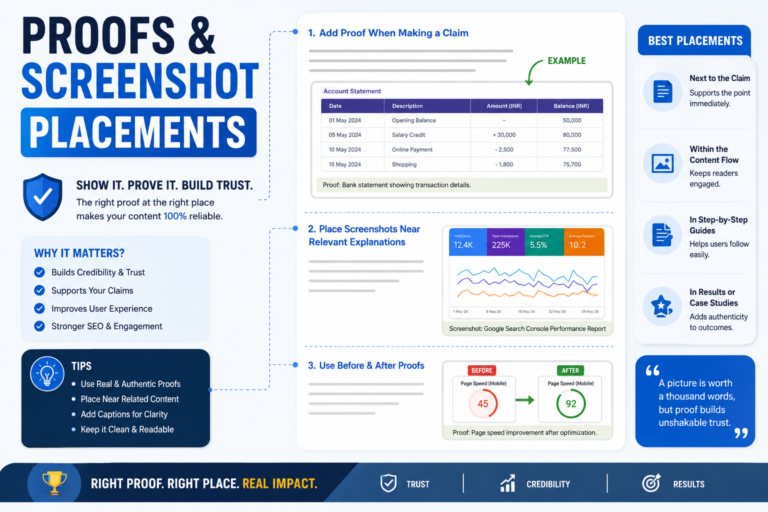
Proofs & Screenshot Placements
Who This Guide Is NOT For
This guide is not designed for someone who wants to:
- flip a property within a few months
- buy based on rumours
- chase a “pre-launch opportunity”
- depend on guaranteed appreciation
- purchase solely because a broker says “prices will double”
- invest money needed for near-term expenses
- stretch their finances simply to own a larger home
You should consider waiting if:
Your EMI would leave you with almost no emergency savings.
You have unstable income.
You are unsure where you will work in the next 1–2 years.
You are buying only because relatives or brokers say property prices will rise.
You have not calculated the all-in purchase cost.
In some cases, renting for another year while building your down payment is financially smarter than rushing into a ₹70–90 lakh purchase.
That is not failure.
That is disciplined buying.
If I Were Buying This Property Today
I would not rush into the first “affordable” 3 BHK I found.
I would shortlist approximately 5–7 properties and eliminate them aggressively.
My preferred target would be a well-planned 3 BHK in roughly the ₹65–85 lakh range, depending on carpet area, location, construction quality and total acquisition cost.
I would prefer:
- ready-to-move or near-possession
- practical carpet area
- good natural light
- reliable water supply
- reasonable parking
- strong approach road
- established surrounding development
- transparent documentation
- manageable maintenance
I would rather buy a simple, well-located 3 BHK with fewer luxury amenities than pay a large premium for a project whose biggest selling point is its clubhouse.
What I would negotiate hardest
Not just the base price.
I would negotiate the all-inclusive cost.
I would also ask for clarity on:
- parking
- maintenance
- floor-rise
- club/infrastructure charges
- payment schedule
- possession
- included specifications
One red flag I would not ignore
A salesperson who creates pressure before providing documents.
If I hear:
“Book today; papers can be checked later.”
I walk away.
The right property will still require due diligence.
Conclusion:
Finding budget-friendly 3 BHK flats in Shela is possible, but the buyer has to look beyond the headline price.
Current market listings show that 3 BHK properties can be found across a broad range, with several options around ₹60–75 lakh and many others moving toward ₹80 lakh, ₹90 lakh and ₹1 crore+.
The real question is not:
“What is the cheapest 3 BHK in Shela?”
It is:
“Which 3 BHK gives me the best combination of total cost, usable space, location, construction quality, legal safety and future resale potential?”
That is the question that can save you lakhs.
If you are comparing properties, make your own three-column comparison of total cost, advantages and risks before paying a booking amount. And if you are unsure about one particular property, get the documents checked rather than relying on a sales pitch.
FAQ – Real Buyer Doubts
1. What is the cheapest price for a 3 BHK in Shela?
2. Is ₹70 lakh enough for a 3 BHK in Shela?
3. Should I buy a ready-to-move or under-construction 3 BHK?
4. Are 3 BHK flats in Shela good for investment?
5. Should I buy a 3 BHK in Shela now or wait for prices to fall?
References
About the Author